


The Courage to Act: Changing the Trajectory of a Fractured World
- Dec 26, 2025
- 2 min read
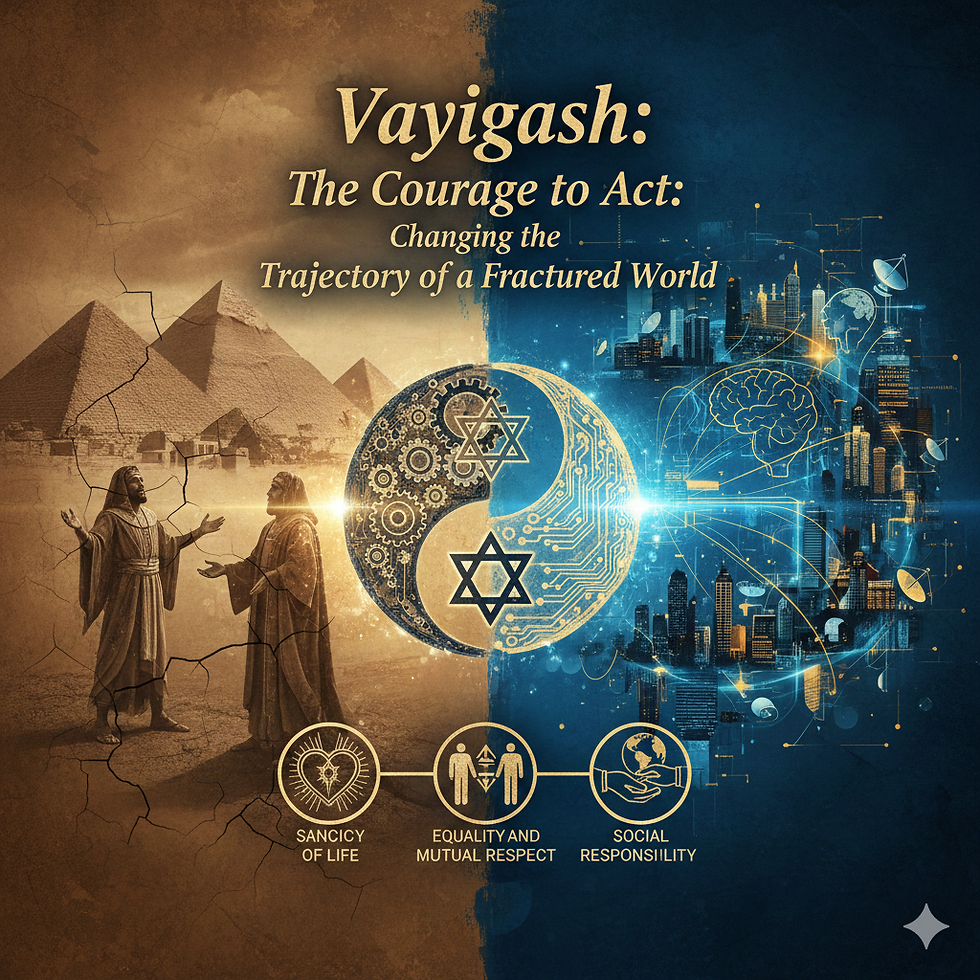
We are living through an era of profound fragmentation. When the world feels increasingly hostile and the headlines are dominated by violence, it’s easy to feel powerless. But as the noise grows louder, a vital question remains: What can we—individually and collectively—do to change the course?
Ironically, a powerful counter-current is moving beneath the surface. Driven by the breakneck pace of technological advancement, our world is becoming more interconnected and interdependent in real time than at any point in history.
These opposing forces—fragmentation and integration—are two sides of the same coin. This paradox suggests that if we look past the friction, there is a massive, untapped opportunity to discover a new alignment of interests.
The key to navigating this paradox lies in the adoption of a universal value system—one predicated on timeless biblical principles. When our technological connection outpaces our moral maturity, we falter. To change our trajectory, we must return to foundational truths:
The Sanctity of Life:
Recognizing that every individual is made Imago Dei—in the image of God—and possesses inherent dignity.
Equality and Mutual Respect:
Living out the mandate to 'love your neighbor as yourself,' acknowledging that there is no hierarchy of human worth.
Social Responsibility:
Embracing our role as our 'brother’s keeper,' ensuring that our interconnectedness leads to communal flourishing rather than exploitation.
One of the most profound demonstrations of this transformative responsibility is found in the story of Joseph and his brothers. In a climactic moment of the biblical narrative, Judah stands before the Viceroy of Egypt to plead for the release of his brother, Benjamin. Facing the most powerful man of his era, Judah offers no excuses. Instead, he declares his personal accountability, having pledged himself as surety for the boy’s wellbeing. He is willing to sacrifice his own freedom for the sake of his brother.
Judah understood a fundamental truth we often overlook: responsibility is not a feeling, but an action. He possessed the courage to live out his principles when the stakes were at their highest. To change our modern trajectory, we must first realize that we are truly "in this together." Only then can we find the integrity and the courage to behave accordingly—even when it requires significant personal sacrifice.
Comments